I’ve spent enough late nights around a wailing newborn to know that the right bedside setup can quietly rescue a household, or quietly wreck it. A bedside crib with a bundled mattress removes one of the strangest anxieties of the early weeks: the scramble to find a sleep surface that actually fits the frame you bought. No improvised padding, no half-right sheets, no 2 a.m. gap you keep staring at.
This list is for parents weighing the trade-offs, not chasing a fantasy. Newborn sleep spaces split into two broad families: the airy, wheeled, multi-mode bassinets that follow you from room to room, and the wood-grain mini cribs that anchor a corner of your bedroom for months. Some picks in this roundup lean into portability, some into longevity, and a couple try to do both. The right call depends on how you live, how long you plan to room-share, and how much real estate you can spare.
I compared these five against three questions: is the mattress genuinely included and properly sized, does the frame suit a small bedroom, and will it survive the messy months that follow unboxing? Read on for the specifics, and skip to the buying guide if you’d rather map the trade-offs first.
The Lineup, Simplified

GAIVE Baby Bassinet, Pack and Play, Bedside Sleeper

Newton Baby Galileo Mini Crib (Sage)
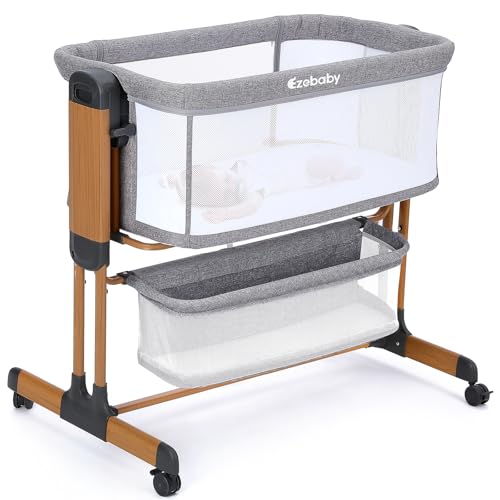
Ezebaby 3-in-1 Baby Bassinet with Storage

BIERUM Bedside Bassinet, 7 Height Adjustable

Baby Bassinet Pack and Play with Changer
Taking A Closer Look At The Options
The GAIVE bassinet starts life as a bedside sleeper and pivots into a pack-and-play as your baby grows. Tool-free setup matters more than it sounds at 3 a.m., and the four lockable wheels let you glide it from bedroom to living room without dragging. For parents who want a single frame to cover the newborn months and the curious-toddler phase, this is the kind of unglamorous utility that pays off quietly.
Unlike the wood-frame Newton below, this one is built around a mesh-and-fabric body, so it folds into a carry bag rather than anchoring a corner of the room. The trade-off shows up in longevity: pack-and-plays feel softer at the joints after a year of daily use, and the included mattress is a thin pad rather than a structured sleep surface. For most newborns through early sitting, though, it does the job without the fuss.
Standout Benefits
- One frame covers bassinet, bedside sleeper, and playpen modes
- Lockable wheels roll smoothly between rooms on hardwood and low-pile carpet
- Folds into a carry bag for grandparents’ houses and weekends away
- Mesh sides let you see your baby at a glance without standing up
- Tool-free setup saves patience during the bleary first weeks
Things To Consider
- The bundled mattress is a thin pad, which means hand-washing and slow air-drying after the inevitable spit-up stage
- Fabric sides breathe well but can sag slightly once the baby starts pulling up
The Right Fit
First-time parents who want one piece of gear that genuinely transitions through the first year and don’t mind a softer, fabric-based frame.
Skip It When
You’re planning to room-share for the full infant stage and want something that doubles as a real piece of furniture, in which case the Newton Baby Galileo Mini Crib makes more sense.
Where the GAIVE is fabric and folding, the Newton Baby Galileo Mini Crib is solid beech wood, sustainably sourced and finished in a non-toxic, multi-step stain. The sage finish reads as grown-up furniture rather than baby gear, which matters in small bedrooms where the crib stays visible all day. A mini crib footprint is smaller than a standard crib, so you can actually walk around the bed.
Two mattress height settings let you lower the sleep surface as your baby starts pushing up, and the included mattress is part of the package, no separate spec-sheet puzzle. Locking caster wheels sound like a small detail until you’re rearranging the room at midnight. For parents who care about how the nursery looks after bedtime, this is the rare bedside crib that earns its corner.
What Pays Off
- Solid beech frame outlasts the fabric-and-tube construction of most bassinets
- Two height settings match a growing baby through the rolling and sitting stages
- Locking casters make room rearranging a one-person job
- Non-toxic, multi-step stain keeps the finish presentable through daily wipe-downs
Worth Noting
- Wood frame weighs more than a folding bassinet, so it’s less appealing for travel between homes
- Mini-crib mattress sizing is specific, and replacement sheets should be confirmed against the manufacturer’s dimensions later on
- Wood grain can show scuffs once an older sibling starts “helping”
Made For
Parents who want a bedside sleep space that doubles as lasting nursery furniture through the entire infant stage.
Look Elsewhere When
You split weeks between two homes and need something that collapses into a car trunk, where the kingobabys Pack and Play below is a more forgiving choice.
The Ezebaby bassinet is built around a horizontal rocking motion rather than an arc, which the brand markets as a more stable settling rhythm. In practice, that means you can nudge it back into motion with a fingertip at 2 a.m. without leaving the bed. The frame also pulls double duty as a co-sleeper and a standalone crib, and a storage basket underneath swallows the surplus of burp cloths and swaddles that always piles up.
For parents whose newborn only settles with motion, the rocking function is the headline feature, and the wheeled base keeps it mobile. Same story with mesh sides as the GAIVE: visibility is good, breathability is built in, and the mattress fits the frame without a spec hunt. The trade-off is the same as every bassinet in this category: outgrown quickly once baby pulls to standing.
What Stands Out
- Horizontal rocking motion settles fussy newborns without swinging wide
- Under-frame storage basket keeps the 3 a.m. essentials within arm’s reach
- Wheels with locks move easily between the bedroom and the living room
- Mesh side panels improve airflow and let you check on baby without leaning over
Trade Offs
- The rocking feature adds moving parts, so owners commonly check the joints periodically once baby starts wiggling
- Bassinet weight limits mean the frame is retired earlier than a convertible crib
Who It Suits Best
Parents of motion-loving newborns who want a bedside sleeper that doubles as a daytime settling station.
Consider Something Else When
You want a frame that genuinely carries you into toddlerhood, where the BIERUM bassinet’s height-adjustable layout has more staying power.
The BIERUM bassinet solves the most common bedside-crib frustration: matching the sleep surface to a tall bed frame. Seven height positions sound excessive until you’ve tried wrestling a low-fixed bassinet up against a 28-inch mattress. The steel-alloy frame keeps the whole thing under one adult’s lift weight, and the large storage bag underneath is a quieter win than the marketed features.
For apartment bedrooms where every inch counts, the small footprint and the included mattress make this a tidy all-in-one package. Unlike the rocking Ezebaby above, there’s no motion to keep maintained, so the trade-off is simplicity over soothing. Parents who want a stationary sleeper that fits a variety of bed heights will find this hits the mark.
The Case For It
- Seven height adjustments line up with platform beds, traditional frames, and adjustable bases
- Steel-alloy frame holds its shape through daily assembly and folding
- Lockable wheels keep the bassinet anchored once positioned beside the bed
- Large under-bed storage bag reduces the gear pile on the nightstand
Room For Improvement
- Polyester fabric covers require gentle machine washing once spit-up season hits full stride
- No rocking motion, so settling falls entirely on the parent’s arms or a sound machine
Best Suited To
Apartment dwellers and parents with taller bed frames who need a low-fuss sleeper that aligns cleanly with the adult mattress.
Reach For A Different Pick When
Your baby only naps with gentle motion, in which case the Ezebaby 3-in-1’s rocking base is a better match.
The kingobabys pack-and-play takes the multi-mode idea and stretches it further: bedside sleeper, changing table, playpen, and standalone crib all share one frame. The one-step fold is the feature most parents come to love in the second trimester of exhaustion, when collapsing anything feels like a chore. Wheels and a carry-friendly profile round out the travel-friendly side of the equation.
This is the option to weigh when you’re moving between homes or squeezing baby gear into a studio apartment. Compared to the GAIVE earlier in this roundup, the mode count is higher, though the bundled mattress is similarly thin and best for the newborn window. Once baby starts climbing, owners commonly retire the frame as a standalone crib and keep it as a play yard instead.
Strengths Worth Knowing
- Four-in-one design reduces the number of separate baby items cluttering the closet
- One-step fold speeds up packing for grandparents, hotels, and weekend trips
- Wheels glide over door thresholds without dragging
- Built-in changing surface saves trips to the nursery during the day
Points To Note
- More conversion parts mean more points to check when assembling and folding
- Fabric body stretches over time, especially once baby pulls to standing
Perfect Match For
Parents juggling limited space or frequent travel who want one frame to span bassinet, diaper station, and play yard.
A Better Fit Elsewhere
You want a sleep surface that doubles as proper nursery furniture, where the Newton Galileo Mini Crib’s solid beech frame is the more enduring choice.
Matching The Right Bedside Crib To Your Sleep Setup
The first decision is whether you want a stationary frame or a rolling one. Stationary mini cribs anchor a corner of the bedroom and outlast the newborn months, while rolling bassinets follow you from room to room and fold away for travel. Parents who move between homes typically do better with the second category, and parents who plan to room-share for the full infant stage usually appreciate the first.
Height adjustability matters more than marketing copy suggests. Most adult beds sit between 18 and 30 inches off the floor, and a bedside crib that doesn’t match that range leaves a gap you’ll worry about at 3 a.m. Frames with five or more height settings give you room to grow with the bed frame, and they survive moves between apartments where the mattress height changes.
The included mattress is the detail that quietly saves a hundred dollars and a week of spec-checking. Every pick on this list ships with a fitted mattress, so you skip the search for a third-party pad that fits the frame’s exact dimensions. The trade-off is that bundled mattresses tend to be thinner than aftermarket options, which is fine for newborns but limits how long you can use the frame.
Mesh sides versus solid panels comes down to your bedroom climate and your comfort level. Mesh breathes, which helps in warm rooms and reduces the urge to peek every five minutes. Solid panels feel cozier but hold heat, so they suit cooler bedrooms and shorter room-sharing windows.
Key Considerations Across These Picks
Mistakes Worth Dodging
Bedside cribs that don’t list a mattress height range leave you guessing whether the sleep surface will actually line up with your adult bed. Always check the frame’s lowest and highest positions against your mattress height before ordering, because a 2-inch gap turns the bedside function into a reach-across-the-room exercise.
Another trap is buying a bassinet with the goal of using it through toddlerhood. Most bassinets top out around 15 to 20 pounds, and once your baby pulls to standing, the soft frame becomes a tipping hazard rather than a sleeper. Picking a crib-sized frame from the start is the honest read for parents who want to skip the second purchase.
Where The Extra Money Goes
The premium tier in this category mostly buys you materials: solid wood instead of fabric and tube, structured mattresses instead of thin pads, and finishes that survive daily wipe-downs. For parents who plan to use the frame through the entire infant stage, that upgrade pays off in longevity and resale value. For parents who need a frame for six months and then plan to move on, the budget bassinets on this list already cover the essentials without the premium.
Frequently Asked Questions
How Long Can A Newborn Sleep In A Bedside Crib?
Most bedside cribs and bassinets are designed for the first four to six months, until your baby pushes up on hands and knees or hits the manufacturer’s weight limit. Once baby starts pulling to standing, the frame becomes unsafe for sleep and you should transition to a full-size crib.
Do Bedside Cribs Really Help With Night Feedings?
Yes, because they keep your baby at arm’s reach without bed-sharing, which reduces the time and disruption of getting out of bed for each feed. A height-matched bedside crib means you can lift your baby directly to a nursing position without standing.
Are The Mattresses That Come With These Cribs Safe?
Bundled mattresses are sized to fit the frame exactly, which removes the gap hazard that comes with ill-fitting third-party pads. They tend to be firmer and thinner than aftermarket options, which is actually safer for newborns who need a flat, supportive surface.
Can A Bedside Crib Double As A Regular Crib Later?
Convertible bedside sleepers can transition into standalone bassinets or play yards, but they rarely convert into a toddler bed. For long-term use, a wood-frame mini crib or a separate convertible crib is the better route.
What Is The Best Room Temperature For A Newborn Sleeping In A Bedside Crib?
Pediatric sleep guidance points to a room temperature around 68 to 72 degrees Fahrenheit, which prevents overheating regardless of the crib style. Mesh-sided frames help in warmer rooms, while solid-panel frames suit cooler bedrooms where you want a cozier feel.
Final Take
The right bedside crib is the one that fits your bed, your room, and your tolerance for gear that folds. Start with height adjustability and mattress fit, then pick between a stationary wood frame and a rolling bassinet based on how you actually live. Either way, a matched mattress included in the box removes one of the stranger headaches of the newborn weeks, and that’s worth more than a glossy feature list.