Moving a three-year-old out of a crib is a real milestone, and the bed you pick shapes the first few months of that transition. Low frames help tiny climbers feel independent, while upholstered guardrails soften inevitable tumbles during restless nights. The right call depends on your child’s sleep style, your room layout, and how long you want this frame to last before the next upgrade. I’ve sorted through five well-matched options to make that decision a little easier.
A Fast Comparison Of The Options

GarveeHome Twin Upholstered LED Bed Frame (Pink)
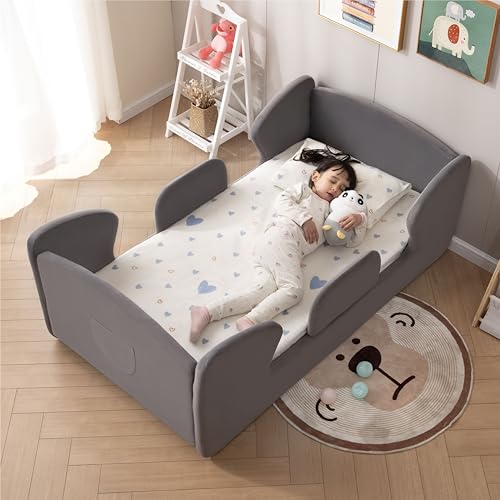
Zumspiel Toddler Floor Bed Frame with Safety Rails

MaverickFurni Twin Bed Frame for Kids (Blue)

LILYPELLE Toddler Bed with Safety Guardrails

EXPERLAM Montessori Twin Floor Bed with Guardrails
Meet The Standout Selections
A bed that doubles as a nightlight is a clever pitch for a three-year-old, and this one leans into the idea fully. The arched rainbow headboard carries built-in LEDs, which makes bedtime feel like a small ceremony rather than a chore. Twin sizing also gives plenty of runway for the years ahead, since a three-year-old can easily grow into it well past age eight.
Underneath the playful surface sits a practical platform setup, which is to say slats (the thin supportive bars running side to side under a mattress) hold the mattress without a bulky box spring (a separate rigid frame traditionally placed between a mattress and bed base for support). For a child who shares a room or whose floor space is tight, a sliding storage drawer at the foot adds a quiet bonus: out-of-season clothes and extra blankets disappear out of sight. It lands as a thoughtful pick for a princess-themed bedroom where atmosphere matters as much as function.
What Makes Sense
- Integrated LED rainbow headboard turns bedtime into a small ritual, easing the transition out of a crib
- Sliding storage drawer at the foot of the bed absorbs toys and linens, useful in shared rooms
- Twin footprint (a standard twin mattress measures roughly 38 by 75 inches) outlasts a toddler-sized bed by several years
- Berber fleece (a looped, soft pile fabric) headboard upholstery softens contact for kids who sit up to read
- Solid wood slat support means no box spring purchase required, which keeps the total setup simpler
Things To Consider
- The pink rainbow styling won’t fit every child’s taste, especially for kids who drift toward neutral or bold palettes
- Upholstered fabric on the headboard needs occasional spot cleaning, which most families handle with a damp cloth
- LED components add a small wiring consideration during assembly compared to a plain platform frame
Whose Bedroom It Belongs In
Parents furnishing a themed kid’s room where a touch of magic and a real bed for years of sleep are both on the wishlist.
Look Elsewhere When
Shoppers wanting a quieter, more grown-up look should turn to the MaverickFurni Twin Bed Frame for Kids (Blue), which trades the LED drama for a calmer linen aesthetic.
Some three-year-olds are still closer in size to a toddler than to a school-age kid, and this Zumspiel frame meets them exactly where they are. It accepts a standard crib mattress, so families transitioning out of a crib don’t have to buy a whole new sleep setup on the same day. The low-to-floor profile also keeps tumble distance short, and that matters a lot to parents of newly mobile sleepers.
Removable safety rails and a small storage bag round out the build. The rails give guardrail-level confidence when a child first starts sleeping in a “big bed,” and they can come off later when balance improves. Compared to the GarveeHome option, which leans into statement design, this one leans into calm utility, which is exactly what most crib-to-bed transitions call for.
What Pays Off
- Standard crib mattress compatibility saves money during the transition since families can keep their current mattress
- Low-to-floor height lets toddlers climb in and out on their own, supporting early independence
- Removable safety rails adjust as balance grows, giving flexibility through the toddler years
- Side storage bag catches stuffed animals and a favorite blanket, reducing bedtime negotiation
- Soft velvet (a short-pile woven fabric with a smooth feel) and foam padding soften the edges kids tend to bump into at this age
Worth Noting
- Crib-sized surface means an upgrade will be needed sooner than a twin frame like the GarveeHome option
- Floor-level height leaves less under-bed storage than raised frames, a small thing for tight rooms
Who Will Love This
Families in the first months of a crib-to-bed move who want something gentle, low, and easy to live with.
Consider Something Else When
Parents planning to skip the toddler phase should weigh the EXPERLAM Montessori Toddler Bed instead, since its adjustable rails and twin sizing stretch further into childhood.
For a child whose room skews calm rather than theatrical, a clean-lined twin frame often lands better than a themed one. This MaverickFurni bed uses linen fabric (a breathable natural-fiber textile with a subtle woven texture) on the headboard and a soft blue tone across the frame, which keeps the room from feeling busy. The look is closer to a grown-up guest bed than a cartoon character, and that has real appeal past age five.
What sets this one apart is the noise control. Reinforced joints and anti-rattle fittings (small hardware pieces added at contact points to keep parts from shifting and squeaking) help the frame stay quiet through restless tossing, which is something light sleepers and downstairs neighbors tend to appreciate. It also stands in nice contrast to the GarveeHome frame: same twin footprint, very different personality.
What Works In Its Favor
- Adjustable headboard with high-resilience foam (dense cushioning that bounces back rather than flattening out) gives a soft backrest for reading or winding down
- Linen upholstery breathes well, helpful in warm rooms where synthetic fabrics trap heat
- Metal structure plus solid wood slats delivers a stable, no-squeak platform
- Minimalist blue silhouette ages gracefully from toddler room to tween room without a rebrand
Minor Gripes
- Linen fabric tends to show marks more than darker or patterned upholstery, so occasional spot cleaning is likely
- No built-in storage drawer, so families needing under-bed stowage will want to add bins separately
Quick Technical Notes
Made For
Families furnishing a long-term bedroom for a child who already leans toward a calmer, more grown-up aesthetic.
A Better Fit Elsewhere
Parents wanting extra sleep-easy padding on the sides should look at the LILYPELLE Toddler Bed, which trades the minimalist look for plush cloud-shaped guardrails.
Some three-year-olds sleep like they’re in a gymnastics routine, and for those kids, padded guardrails make a real difference. This LILYPELLE bed wraps the side rails in cloud-shaped foam curves, which softens the hard edges a restless sleeper tends to bump into during the night. The look is soft and friendly rather than clinical, and that visual cue often helps hesitant kids settle in faster.
Velvet upholstery and high-density foam (firm cushioning that resists compression over time) line the whole frame, so even when a child rolls against the rail mid-sleep, the contact stays gentle. Compared to the Zumspiel floor bed, this one sits higher off the ground, which gives more under-bed clearance for storage bins but also means a bigger tumble if a child rolls off during a nightmare.
A Strong Showing
- Cloud-shaped padded guardrails create a contained sleep zone that helps restless kids stay centered on the mattress
- Fully rounded, cushioned edges reduce the impact of common bumps during restless sleep
- Velvet upholstery gives a soft hand-feel that toddlers tend to find comforting
- Raised guardrails lower the risk of rolling out during deep sleep, helpful for deep sleepers
Points To Note
- Velvet tends to attract lint and pet hair, so weekly light brushing may be needed in pet households
- Higher frame height means a longer drop than the floor-level Zumspiel option if a child climbs out unexpectedly
Right Fit For
Parents of active sleepers who want a softer, more enclosed feel during the early crib-to-bed months.
Skip It When
Families wanting the lowest possible profile should reach for the Zumspiel Toddler Floor Bed Frame, which sits closer to the ground for safer solo entry and exit.
Montessori-style beds lean into a simple idea: let the child move freely rather than relying on a tall crib rail. This EXPERLAM twin floor bed is built around that philosophy, with a low platform and high guardrails that keep a sleeper contained without trapping them in. It’s a thoughtful match for families already following a Montessori rhythm at home.
What I appreciate most is the adjustability. The legs can raise or lower the frame, and the guardrails come off entirely when a child is ready for an open bed. That makes it a much longer-term buy than most toddler frames, since it grows from a floor bed to a low twin through several stages. Against the MaverickFurni option, it offers more flexibility, though it trades the upholstered headboard for a clean wooden look.
A Few Highlights
- Twin sizing means it carries a child well past the toddler years, often into the early tween stage
- Removable guardrails adapt the frame as balance and confidence grow, removing the need to buy a second bed in a few years
- Variable leg setup lets families choose between a true floor bed and a low-platform twin
- Ten slats plus a supporting keel (a central lengthwise beam that strengthens the slat row) deliver solid mattress support without a box spring
Honest Caveats
- Wooden finish shows scuffs more visibly than upholstered frames, which is worth keeping in mind in active rooms
- Assembly involves several parts and hardware, so setting aside focused time helps avoid mid-build frustration
Best Suited To
Families following a Montessori approach who want one frame that adapts from toddler floor bed to a proper twin as their child grows.
Swap It Out When
Shoppers wanting more visual flair should consider the GarveeHome Twin Upholstered LED Bed Frame, which leans into themed style rather than adaptable function.
Picking The Right Bed For A Three-Year-Old
Floor Bed Versus Raised Frame
The Montessori crowd tends to favor floor-level beds because they let toddlers wander in and out without a fall risk. Raised frames, on the other hand, often feel more “real bed” to a child coming out of a crib and usually leave more storage space underneath. In most homes, the choice comes down to room layout: smaller rooms benefit from under-bed clearance, while open floor plans pair naturally with floor beds.
Safety Rails And Edge Padding
Guardrails matter most during the first few months after the crib, when depth perception and nighttime balance are still developing. Padded edges on upholstered frames soften contact for active sleepers, while wooden rails offer a firmer boundary. The right pick depends on your child’s sleep style: restless rollers usually want more padding, calm sleepers usually need less.
Size And Room To Grow
A crib-sized mattress saves money upfront, while a twin frame stretches well into the tween years. If a child is on the larger side for their age, a twin tends to feel more comfortable from day one. In tight rooms, the smaller footprint can still win out, especially when paired with a floor-level design.
Material And Maintenance
Upholstered frames feel softer but collect lint, hair, and minor spills, which means occasional spot cleaning. Wooden frames are easier to wipe down but show scuffs more visibly over time. For most families, the deciding factor is how visible daily messes tend to be in the room where the bed will live.
Smart Choices For First-Time Parents
Common Buying Slip Ups
Buying a frame sized only for “right now” tends to backfire. A standard twin frame outlasts a toddler bed by several years and avoids a second purchase mid-childhood. Another common miss is overlooking guardrail compatibility with the mattress thickness, since a thin mattress can leave a gap a child rolls under. It’s also worth checking clearance under the bed before choosing a raised design, since low-clearance frames often block floor-level storage.
Where The Extra Money Goes
Higher-tier frames in this category typically add upholstered guardrails, integrated lighting, or convertible leg systems. Those upgrades tend to pay off when a child is hard on furniture or when parents want one frame that lasts through multiple stages. For a calm sleeper in a small room, a simpler floor bed usually delivers enough value without the extra spend.
Frequently Asked Questions
What size mattress fits a bed for a three-year-old?
Most toddler beds accept a standard crib mattress, while twin frames need a twin-size mattress, which measures roughly 38 by 75 inches. Choosing twin sizing usually means the bed outlasts the toddler years by a wide margin.
How long does the crib-to-bed stage actually last?
Most kids stay in a toddler or twin bed from age three through about age eight, depending on growth rate and how much they like their bed. A twin frame with removable rails often rides out the entire stretch without an upgrade.
Are floor beds safe for toddlers?
Low-profile frames are generally considered safer for active sleepers because the fall distance stays short. Guardrails still help during deep sleep, especially in the first few weeks after the crib.
Do upholstered beds hold up to spills and accidents?
Most kid-oriented upholstery handles small spills when spot-cleaned quickly. Velvet and fleece tend to attract lint and pet hair, while linen holds up well to routine wiping but can show marks over time.
When is the right time to move from a crib?
Most pediatric sleep guides suggest the move once a child tries to climb out of the crib or reaches about 35 inches in height. A floor bed or low twin tends to ease that shift when a child is developmentally curious about a “big kid” bed.
Closing Remarks
The best bed for a three-year-old is the one that matches your child’s sleep habits, your room, and how long you want this frame to last. A floor bed earns its keep during the earliest transitions, and a twin with thoughtful extras carries a kid well past the toddler years. Whichever direction fits your family, the right frame turns bedtime into a small win instead of a nightly negotiation.