Anyone caring for a loved one confined to bed for long stretches knows the quiet worry behind every repositioning routine: pressure damage builds faster than you’d expect, and the right surface can buy you real time between turning cycles. Alternating pressure pads work by cycling air through cells that inflate and deflate in sequence, shifting contact points so the skin gets a break. I put this roundup together for family caregivers and at-home clinicians comparing the most common pad-plus-pump systems available right now, so you can match a setup to the body, the room, and the care plan you already have.
The Picks In Brief

Medical king Alternating Pressure Pad for Hospital Bed Or Home Bed

Alcedo Alternating Pressure Mattress Pad, Static Mode
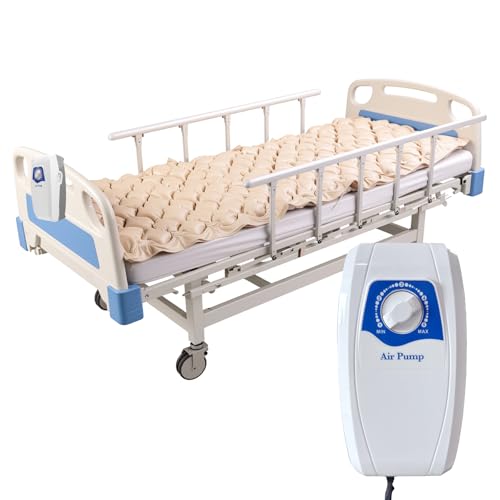
Alternating Air Pressure Mattress Pad, Bed Sore Prevention Solution

MedVance Premium Alternating Air Pressure Mattress Pad with Quiet Pump

Alternating Air Pressure Mattress Pad, 130 Air Cells

MedVance Alternating Pressure Mattress/Air Top Pad with Ultra Quiet Pump

Vive Alternating Air Pressure Mattress Pad
Meet The Standout Selections
The Medical king pad is the entry point I’d suggest for a household caregiver who has never set up an alternating pressure system before. The pad arrives, you unfold it across the existing mattress, hook the included electric pump to the bedside rail or a nearby chair, and within roughly six minutes the 130 air cells inflate into a working surface. Low air loss describes a design that releases small amounts of air through the pad surface to manage moisture and heat, which matters because damp skin breaks down faster than dry skin under pressure.
The waterproof build keeps cleanup manageable when incontinence is part of the daily routine, and the 350-pound capacity covers most adults. Owners commonly wipe the surface down with a mild disinfectant rather than laundering it, which is faster during a busy shift. It’s a sensible first step when you’re bridging the gap between a standard home bed and a full clinical setup.
Strong Points
- Inflates in about six minutes, which shortens the window of disruption during the first install.
- Low air loss airflow helps keep the skin dry over multi-hour stretches without manual intervention.
- Waterproof surface wipes clean with standard household disinfectants.
- Handles up to 350 pounds, fitting a wide range of adult body types.
Worth Noting
- No digital display on the pump, so pressure adjustments rely on a manual dial.
- The pad sits on top of an existing mattress, adding height that may require adjusting bed rails.
Who Should Grab It
Family caregivers setting up a temporary or permanent care bed in a spare room without clinical equipment experience.
Skip It When
The MedVance Premium pad offers digital pressure controls if a household wants finer-grained pump adjustments than this dial can deliver.
The Alcedo pad is built around an upgraded ultra-quiet pump with a static mode toggle, and that one feature changes how the pad behaves at night. Static mode means all air cells stay fully inflated at the chosen pressure rather than cycling, which is useful during feeding, dressing changes, or any moment when a stable surface makes caregiving easier. You flip back to alternating mode for routine pressure relief during sleep.
Compared with the Medical king pad’s manual dial, the Alcedo’s soft-to-firm pressure range gives you a wider adjustment window without needing a clinical background. The pump hum stays low enough that a light sleeper in the same room usually doesn’t notice it. Setup follows the same unfold-and-connect pattern as the other pads in this category.
Useful Strengths
- Static mode provides a flat, stable surface for meals and wound care.
- Pump adjusts across a soft-to-firm range to match patient preference.
- Low noise output supports shared bedrooms and daytime naps.
- Switching between modes takes seconds on the pump unit.
Trade Offs
- Static mode requires manual reactivation of alternating cycles after each caregiving task.
- The pump unit sits on the floor beside the bed, so cord routing matters in small rooms.
Made For
Caregivers who split their day between active repositioning and rest periods and want both modes in one pad.
Look Elsewhere When
The Voinnokal pad is a closer match when quiet pump operation matters more than static mode flexibility, since it dedicates its design specifically to whisper-level cycling.
The Voinnokal pad is positioned squarely at the bedridden patient at home, with cycling designed to redistribute body weight across the cells throughout the night. The included pump is marketed as whisper-quiet, and in practice owners tend to place it on the floor beside the bedframe without complaint about hum during sleep. The pad sits on top of a standard home mattress, so it works with the bed you’ve already got.
This one feels like a steady middle-of-the-road choice if the Medical king pad’s six-minute inflation feels rushed to assess and the MedVance Premium’s digital readouts feel like more interface than you need. You get alternating pressure relief and a low-noise pump without extra modes or screens to navigate.
A Favorable Mix
- Alternating pressure cycles target the body areas most exposed during side-lying and supine rest.
- Pump noise stays in the background of a quiet bedroom.
- Drops onto an existing mattress without requiring a hospital bed frame.
- Setup is straightforward enough for one person to handle solo.
Points To Keep In Mind
- The pad is an overlay, so it adds several inches of height to the sleep surface.
- Long-term durability depends on keeping the pump connected and the cells free of sharp objects.
Right Fit For
Households managing a long-term bedridden family member and wanting a pad that runs quietly through the night without extra features.
A Better Fit Elsewhere
The MedVance Alternating Pressure Mattress/Air Top Pad is worth a look if you want a quilted cover on top, since this pad ships without one.
The MedVance Premium is the model that looks at home in a small care facility rather than a spare bedroom. Its pump operates under 20 decibels, which lands in the same whisper-quiet territory as the Voinnokal and Alcedo pads but pairs that low noise with a digital control panel. The dual pump cores drive consistent airflow through the cells, and built-in alarms flag pressure irregularities before they become skin problems.
This is the pad I’d suggest when caregivers rotate shifts and multiple people need to read the same settings quickly. The digital display removes the guesswork of a manual dial, which is one of the soft spots on the Medical king pad. Setup mirrors the rest of the field: unfold, connect, inflate.
Everyday Perks
- Digital control panel shows pressure settings at a glance, useful during shift changes.
- Built-in alarms alert caregivers to pressure drops or system faults.
- Hospital-grade construction supports multi-patient or 24-hour use cycles.
- Dual pump cores keep airflow consistent even when one cell is under heavier load.
Honest Caveats
- The digital interface adds a small learning curve for caregivers used to dial-based pumps.
- Premium build typically shows up in the cost, so budget-focused households may look elsewhere.
Best Suited To
Care facilities, hospice settings, and households where multiple caregivers share documentation duties.
Swap It Out When
The Vive Alternating Air Pressure Mattress Pad is a simpler swap if the alarms and digital display feel like overkill for a single in-home caregiver.
The FOMMOF pad takes the 130-cell format and aims it at heavier patients and longer bedrest cycles, cycling every 10 to 12 minutes to keep contact points moving. The pump runs at roughly 28 decibels, slightly louder than the under-20 MedVance Premium but still well below the level of a box fan. The waterproof cover handles the kind of cleanup that comes with incontinence or wound drainage.
Compared to the Medical king pad’s 350-pound capacity, the FOMMOF is built for users closer to the upper weight ranges, which makes it the practical choice when standard pads max out before the patient does. The cycling rhythm also feels less aggressive, so patients who find fast alternation uncomfortable sometimes settle better on this slower pace.
Advantages To Know
- Handles higher body weights than many standard overlays in this category.
- Slower 10 to 12-minute cycle suits patients who find rapid alternation unsettling.
- Waterproof cover protects the cells during incontinence care.
- 130 cells keep contact pressure distributed across a wide surface.
Small Caveats
- Pump noise sits a touch higher than the MedVance Premium’s under-20 dB output.
- The slower cycle may not redistribute pressure as often for very high-risk skin.
Perfect Match For
Bariatric patients and caregivers who prefer gentler, less frequent pressure shifts during the night.
Where Another Pick Suits Better
The Alcedo pad makes more sense when both alternating cycles and a flat static mode are part of the daily care plan.
This MedVance pad is the sibling to the Premium model above, and the biggest difference is the quilted poly PU cover on top of the cells. That cover is the part of the pad the patient actually feels, so a quilted surface adds a layer of softness between the skin and the inflating air cells underneath. The pump runs under 20 decibels with dual cores, matching the Premium spec.
It’s the pad I’d suggest when skin integrity is already fragile and you want every soft surface you can get between the patient and the air cells. Water resistance on the cover is rated for typical fluid contact during care. The air cells underneath do the same alternating work as the rest of this list.
What It Does Well
- Quilted cover layer reduces direct contact with the inflating cells.
- Under-20 dB pump keeps the room quiet during overnight use.
- Removable, water-resistant cover handles routine cleaning and fluid contact.
- Dual pump cores maintain airflow through long overnight cycles.
Room For Improvement
- The quilted cover adds bulk and slightly raises the sleep surface above the bare air pad.
- Cover zippers and seams need occasional inspection since they’re the most handled part.
Who It Suits Best
Patients with sensitive or fragile skin who benefit from an extra soft layer between their body and the cycling cells.
Where A Sibling Pick Shines
The Voinnokal pad is a simpler alternative if the quilted cover feels like extra maintenance that the household doesn’t need.
The Vive pad has been around long enough that it’s become the default reference point for many first-time shoppers, and that longevity says something about the build. It uses 130 heat-sealed air cells cycled by an algorithm that’s been refined over multiple product generations, with each cell sealed to resist leaks at the seams. The pump runs at about 22 decibels and supports multiple pressure levels.
The cycle runs roughly every six minutes, faster than the FOMMOF’s 10 to 12-minute rhythm, so it’s a better fit when quicker redistribution matters more than gentler pacing. It’s the pad I’d recommend when a shopper is uneasy about newer entrants and wants the model with the deepest track record in home care.
Notable Upsides
- Established product history with multiple iterations of the same design.
- Heat-sealed cells resist leaks at the seams, a common failure point on cheaper pads.
- 22 dB pump keeps noise low enough for shared bedrooms.
- Variable pressure levels let caregivers tune firmness to the patient.
Practical Considerations
- Six-minute cycle is faster than some patients prefer during sleep.
- The pad has accumulated design tweaks over time, so verify the current spec sheet before ordering.
Built With In Mind
First-time shoppers who want a model with an established reputation and broad compatibility across standard home beds.
Reach For A Different Pick When
The FOMMOF pad’s slower cycle is a better match for restless sleepers who react to faster alternation rhythms.
How To Match The Right Pad To Your Care Setup
The first decision is weight capacity, because a pad that bottoms out under a heavier patient does more harm than the bare mattress would. Look at the manufacturer’s stated limit, not the marketing language, and aim for a pad rated comfortably above the patient’s actual weight. The Medical king and Vive pads handle standard adult ranges, while the FOMMOF covers higher weights.
The second decision is pump noise. Sound pressure level (dB) is the unit used to rate pump hum, and anything under roughly 25 dB sits below a quiet conversation. In shared bedrooms or light-sleeping households, that threshold matters more than extra features. The MedVance Premium and Alcedo pads lead this category.
The third decision is whether you need static mode. If your routine involves bed baths, wound dressing, or feeding in bed, a pad that locks into a flat surface during those tasks (like the Alcedo) makes the work easier. Alternating-only pads force you to work on a surface that’s gently shifting under your hands.
The fourth decision is the cover. Quilted poly PU covers, like the one on the MedVance Air Top Pad, add comfort but require occasional inspection. Bare air pads are simpler to wipe down but place skin directly against the cells.
What Separates Premium From Basic In This Category
Common Shopping Slip Ups
The most common mistake is buying a pad by price alone, since the cheapest overlays often skip pressure adjustment, leak at the cell seams within months, or ship with underpowered pumps that can’t maintain consistent inflation through the night. Another slip is overlooking pump noise; a 5 dB difference sounds small on paper but translates to a noticeably louder hum in a quiet bedroom.
Some shoppers also skip the weight capacity check and trust standard ratings without confirming the patient’s actual weight. And a few forget to measure the bed; these pads fit standard twin and full sizes, but extra-deep mattresses or adjustable bases can change the fit, so verify before ordering.
Where The Extra Money Goes
Higher-tier pads in this list, like the MedVance Premium, add digital controls and dual pump cores that maintain airflow more reliably under load. That matters during multi-hour cycles when cheaper pumps tend to fluctuate, leaving some cells underinflated. Premium builds also tend to use better seam sealing on individual cells, which extends the usable life of the pad.
The quilted covers and under-20 dB pumps don’t cure bedsores on their own, but they reduce the secondary discomforts that lead to patient resistance and caregiver frustration. For most households, the upgrade is worth it once the patient is committed to long-term bedrest rather than short-term recovery.
Frequently Asked Questions
How long do alternating pressure pads typically last?
Most alternating pressure pads in this category last between one and three years with daily use, depending on cell seam quality and pump maintenance. Pads with heat-sealed cells and dual-core pumps tend to outlast single-pump models with simpler seals.
Do these pads replace a hospital bed?
No, these pads are overlays designed to sit on top of an existing mattress, including standard home beds. They don’t replace a hospital bed’s adjustable frame or full side rails, but they do add pressure redistribution to whatever surface is already in the room.
Can the pump run all night without stopping?
Yes, the pumps on these pads are designed for continuous overnight cycling, alternating inflation and deflation on a timed loop. They aren’t meant to be turned off mid-cycle, since the alternation is what produces the pressure relief the pad exists for.
How do you clean an alternating pressure pad?
Most pads wipe down with a mild disinfectant on the surface, and quilted covers like the one on the MedVance Air Top Pad typically zip off for separate cleaning. Avoid harsh solvents or abrasive scrubbers, since these can degrade the waterproof coating or weaken the cell seams over time.
Will an alternating pressure pad work on an adjustable bed?
Most overlays work on adjustable beds, though the bending motion can stress the cells at the break point if the bed is cranked sharply. The pad is generally most stable on flat or gently inclined positions, which covers most home care situations.
Wrap Up
The right pad usually comes down to three practical questions: how much weight it needs to carry, how quiet the pump needs to be, and whether your routine needs a flat static surface during caregiving tasks. From there, the build quality of the cells and pump determines how long the setup holds up under daily use. Match the pad to the patient rather than the spec sheet, and the rest of the decision tends to fall into place.