Sleep safety looks different for a two-year-old than it does for a grandparent recovering from surgery. Toddlers need a soft barrier that stops roll-offs without trapping them, while seniors need a sturdy handle that supports real weight during midnight bathroom trips. Adjustable mattresses add another wrinkle, since bases that flex, elevate, or shift position demand rails designed to stay put through movement. I pulled together eight options that address those very different needs, with honest trade-offs for each.
A Snapshot Of The Selections

ComfyBumpy Toddler Bed Safety Bundle Swing-Down Mesh Rail + Foam Bumper

Toddler Bed Bumper Guard Soft Foam Safety Bed Rail

JUNLLY Bed Rail for Toddlers 55.5″ Extra Tall 25″ Foldable Railing

Lunderg Bed Assist Rail for Seniors with Motion Light
ComfyBumpy 1-Pack Toddler Bed Rail 55.5″ L x 19.5″ H Swing Down

ComfyBumpy Bed Rail for Toddlers 55.5″ Extra-Padded Swing-Down

ComfyBumpy 1-Pack Extra Tall Toddler Bed Rail 55.5″ L x 23.5″ H
Stander EZ Adjust Bed Rail Adjustable Senior Safety Railing
A Deeper Look At The Lineup
This bundle pairs a 55.5″ mesh guard with a 52″ foam bumper, which solves two common toddler-sleep problems at once. The mesh side rail keeps a rolling child from tumbling off the edge, while the foam piece tucks against the opposite side or headboard gap where little limbs tend to slip through. The swing-down design folds flat for easy parent access during story time and bedtime snuggles.
For families transitioning from a crib to a twin, full, queen, or king, this is one of the more complete setups. Adjustable bed owners will want to check that the foam bumper doesn’t shift when the base articulates, since it’s not anchored the same way the rail is. The cover is washable, which matters once potty training starts.
Notable Gains
- Dual-layer approach handles both edge roll-off and gap-pinching concerns
- Mesh panel breathes well, reducing sweat buildup during warm nights
- Fold-down rail makes sheet changes and bed access genuinely easier
- Compatible with the full range of household mattress sizes, not just twin
Things To Consider
- Owners commonly report the foam bumper needs occasional repositioning on restless kids
- Two pieces means more setup time than a single-rail option
Built With In Mind
Parents moving a toddler into a larger bed who want both rail and gap protection in one purchase.
Look Elsewhere When
Shoppers wanting a single lightweight piece should consider the Little Sleepy Head foam bumper instead.
This Little Sleepy Head option is foam from top to bottom, with no metal frame, no hinge, and no assembly. The non-slip cover keeps it anchored under a fitted sheet, and the soft surface means a child who presses against it won’t bonk into a hard bar. That simplicity makes it a smart fit for travel, grandparents’ houses, or RV sleep setups where a full rail would feel excessive.
Where it differs from the ComfyBumpy bundle above is intent: that bundle adds a swing-down mesh guard, while this piece relies entirely on the foam to stop roll-offs. For kids who rarely migrate to the edge, foam alone is enough. For persistent movers, the JUNLLY steel rail further down the list offers more containment.
Useful Touches
- No-metal construction removes any risk of entrapment gaps
- Non-slip underside holds position even when kids shift during sleep
- Washable cover handles the inevitable spills and accidents
- Lights and packs small for travel and overnight visits
Honest Caveats
- Foam offers less physical containment than a rigid rail for active movers
- Cover must be fully dry after washing to prevent mildew
The Right Fit
Travel households, RV sleepers, and parents of light movers who prefer soft barriers over hard rails.
Swap It Out When
Parents dealing with a determined, climbing toddler should reach for the JUNLLY Extra Tall steel rail.
The JUNLLY rail brings a rigid steel frame and a 25-inch standing height to the toddler category, which puts it well above the standard 19-inch options on this list. The extra inches matter on queen beds and adjustable bases, where a tall mattress profile would let a short rail look short on coverage. The fold-down hinge still works for parent access, so you don’t trade convenience for height.
For an active child who shakes or leans against the barrier, the steel construction addresses the wobble that softer rails sometimes develop. Compared to the foam-only Little Sleepy Head above, this is a firmer, more physical barrier. Adjustable bed owners should confirm clamp fit before installing.
Strengths Worth Knowing
- Steel frame resists the leaning and shaking active kids dish out
- 25-inch height outcovers thick mattresses and pillow stacks
- Fold-down hinge keeps parental access simple
- 55.5-inch length runs along most of a twin-side opening
Trade Offs
- Heavier than mesh or foam alternatives, so repositioning takes more effort
- Steel frame needs careful tightening during install to stay silent at night
Made For
Parents of active, climbing toddlers using queen or adjustable beds where standard-height rails come up short.
Consider Something Else When
Travel and lighter use cases fit the Little Sleepy Head foam bumper more naturally than a steel frame.
The Lunderg assist rail serves a completely different population than the toddler products earlier in this list: adults who need a handhold to sit up or stand. The non-slip grab bar supports real weight during nighttime repositioning, which is the moment when most bedroom falls actually happen. A motion-activated light guides the way to the bathroom without needing to fumble for a lamp switch.
Adjustable bed compatibility is a real concern in this category, since some assist rails shift when the base articulates. The Lunderg is designed to stay put during those movements, though owners should confirm mattress depth fits the clamping range. Compare it to the Stander EZ Adjust further down, which adds a different style of certified safety.
Where It Helps
- Ergonomic handle gives a secure grip for sit-up transitions
- Motion light eliminates the harsh lamp-blast during midnight trips
- Reduces fall risk by giving seniors something solid to push against
- Compact footprint suits smaller bedrooms and guest rooms
Small Caveats
- Motion light needs occasional battery checks to stay functional
- Handle height is fixed, so very tall sleepers may need to test grip reach first
Whose Shelf It Belongs On
Seniors aging in place who want a grab bar plus a gentle nighttime guide light in one unit.
Another Choice May Suit When
Those prioritizing certified adult-rail safety standards should consider the Stander EZ Adjust instead.
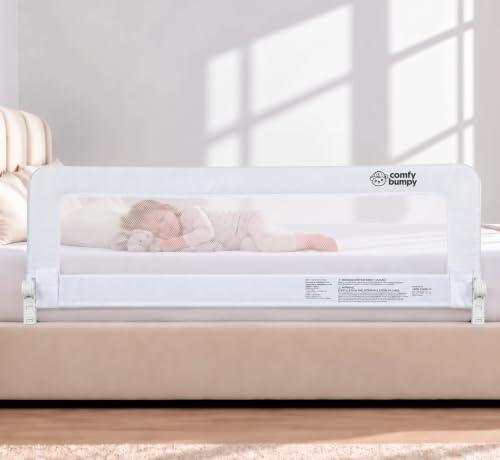
This single-pack ComfyBumpy rail is the stripped-down sibling of the bundle at the top of the list. Same 55.5″ length, same 19.5″ standing height, same swing-down curve, but without the foam bumper or extra layers. For parents who only need a side guard and already have their own gap solution, this keeps things simple.
It works on twin through king mattresses, which means households with multiple bed sizes don’t need different rails for each room. Compared to the JUNLLY steel option above, the mesh build is lighter and easier to reposition, though less tolerant of vigorous shaking. For most average toddlers, the height is enough; for thicker mattresses, the Extra Tall version further down may suit better.
Why It Works Well
- Single-piece design installs faster than the bundle version
- Mesh breathes and stays cool through summer nights
- Fits the full household mattress size range
- Curved swing-down lets parents sit on the bed edge easily
Less Ideal Details
- Lower height than the JUNLLY or the Extra Tall option later on this list
- Mesh fabric may stretch over years of nightly use
Best Suited To
First-time toddler-bed shoppers who want a basic, proven mesh rail without extra components.
Where A Sibling Pick Shines
Parents wanting extra coverage height should look at the ComfyBumpy Extra Tall version later in this roundup.
The Extra-Padded version keeps the same 55.5″ footprint as the basic ComfyBumpy rail but adds cushioning along the contact surface. For kids who press their face or arms against the rail while falling asleep, the padding softens that contact. It’s a small upgrade that matters more than you’d expect during the early toddler months.
Same swing-down curve, same mesh core, same mattress-size range. The trade-off is bulk: padding adds a touch of width that some sheets don’t account for. For restless sleepers, it’s worth that minor compromise. For minimal movers, the standard ComfyBumpy rail above already does the job.
What Makes Sense
- Extra padding reduces facial pressure marks during side-sleeping
- Same reliable swing-down access as other ComfyBumpy rails
- Mesh interior keeps airflow consistent through the padding layer
- Fits twin through king sizes
Points To Keep In Mind
- Bulkier profile than the basic version, so deep-fitted sheets may fit snugly
- Padding can compress over years of nightly contact
Who Should Grab It
Parents of side-sleeping toddlers who press against the rail barrier throughout the night.
Skip It When
Light movers who don’t lean on the rail would do fine with the standard ComfyBumpy single-pack above.
This ComfyBumpy rail keeps the same swing-down curve and 55.5″ length as its standard-height sibling, but stands 23.5″ tall instead of 19.5″. That four-inch jump matters when the mattress is thick, toppers are added, or an adjustable base lifts the head of the bed into a sitting position. Standard-height rails tend to look short in those setups; this one doesn’t.
Compared to the JUNLLY steel rail earlier in the list, the build is lighter and quieter, with mesh instead of a metal frame. The trade-off is firmness: the JUNLLY resists more aggressive shaking, while this rail prioritizes comfort and breathability. For older toddlers on plush mattresses, the extra height is the deciding factor.
Features That Help
- 23.5-inch height handles thick mattresses and pillow stacks comfortably
- Swing-down hinge keeps parental access simple
- Mesh panel avoids the heat buildup of solid barriers
- Works on twin, full, queen, and king mattress sizes
Practical Considerations
- Taller profile may look visually imposing in smaller bedrooms
- Mesh tension requires occasional re-checking after months of nightly use
Perfect Match For
Households with plush mattresses, mattress toppers, or adjustable bases where standard rails fall short.
Reach For A Different Pick When
Active climbers who shake the rail hard may benefit more from the JUNLLY steel-framed option above.
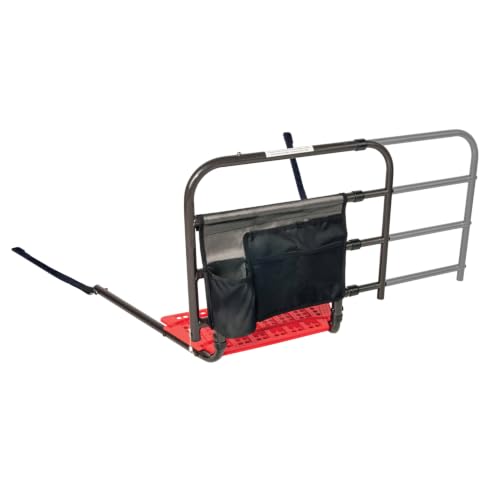
The Stander EZ Adjust is one of the few adult portable bed rails that passes the ASTM F3186-17 standard, which covers both fall prevention and entrapment risk. The rail extends from 20 to 30 inches, adjusting to different mattress thicknesses and sleep positions. A built-in organizer pouch holds a phone, glasses, or a remote within arm’s reach.
For adjustable bed owners, the length adjustment is the key feature: as the base articulates, the rail stays in place without shifting into the wrong position. Compare it to the Lunderg assist earlier in the list, which adds a motion light but doesn’t carry the same ASTM certification. If certification matters most, this is the rail.
Everyday Wins
- ASTM F3186-17 certification adds a layer of verified safety
- 20-to-30 inch adjustable range adapts to mattress depth
- Organizer pouch keeps essentials within reach without leaving bed
- Functions as both roll-off guard and standing assist
Where It Is Less Suited
- Heavier than the Lunderg option, so install and removal take more effort
- Black finish may look more clinical than some bedrooms prefer
Who Will Love This
Seniors and caregivers who prioritize independently tested adult-rail safety standards.
A Better Fit Elsewhere
Those wanting a softer nighttime light built in may prefer the Lunderg Bed Assist Rail above.
Choosing Bed Rails That Actually Fit Your Sleep Setup
A rail that works for a toddler fails for a senior, and vice versa, so the first decision is the user. For toddlers, height and gap coverage matter most. For seniors, handle grip and certification carry more weight. Adjustable mattresses complicate both, since rails must stay anchored when the base flexes, lifts, or shifts into a seated position.
Toddler rail height should clear the top of the mattress once any topper or pillow is in place. A 19.5-inch rail works for a low-profile twin, while plush mattresses often need 23.5 inches or more. Material matters too: mesh breathes and stays cool, foam softens contact, and steel frames handle the most vigorous shakers. The ComfyBumpy bundle adds both a mesh rail and a foam bumper for layered protection.
Senior rails flip the priorities. The handle needs to support real body weight during sit-up transitions, which is where non-slip grip surfaces earn their place. Certification such as ASTM F3186-17 signals that a rail passed independent testing for both fall prevention and entrapment. Adjustable bases benefit from rails with adjustable length ranges, since a fixed-size rail can shift as the bed articulates.
Compatibility with adjustable mattresses is the category’s quiet decider. Some rails clamp to specific mattress depths and lose grip on thinner profiles, while others have a wider tolerance range. Worth checking before purchase: the rail’s clamp range, the mattress depth including any topper, and how the rail behaves when the head or foot of the base elevates.
What To Watch For Before You Click
Mistakes Worth Dodging
A common slip-up is matching rail height to the mattress alone, without accounting for pillow stacks or toppers. A 19.5-inch rail on a 14-inch mattress with a 3-inch topper leaves very little barrier above the sleeping surface. The other frequent miss is skipping the adjustable-base check entirely, since some rails slide or shift when the base flexes.
When Paying More Pays Off
The price gap between basic mesh rails and certified steel-frame options usually reflects material and testing rather than marketing. For households with active toddlers or seniors with real mobility concerns, the upgrade pays back in fewer mid-night repositionings and longer product life. For occasional or travel use, a foam bumper does the job without the extra spend.
Frequently Asked Questions
Do bed rails work with adjustable mattresses?
Most modern rails are designed for adjustable bases, but clamp range and mattress depth matter. A rail that fits a 10-to-15-inch mattress profile is more likely to stay anchored during articulation than one designed only for fixed bases.
How tall should a toddler bed rail be?
For standard mattresses, 19.5 inches is common. For plush mattresses, pillow stacks, or adjustable bases that elevate the head, 23.5 inches or more prevents the rail from looking visually short on coverage.
Are foam bumpers safer than metal rails?
Neither is universally safer. Foam eliminates hard-bar impact and entrapment gaps, while metal frames offer stronger containment for active movers. The right answer depends on the child’s movement patterns and the sleep setup.
What makes a senior bed rail different from a toddler rail?
Senior rails include a handle for sit-up transitions and typically support more body weight. Many also carry adult-specific safety certifications, since toddler-rail standards don’t apply to adult use cases.
Can one bed rail fit multiple mattress sizes?
Several products on this list fit twin through king mattresses, but clamp range still varies. Double-check the manufacturer’s specified depth range before assuming a single rail will work across rooms.
Bottom Line
The right rail depends entirely on who’s using it. Toddlers moving into big-kid beds need height and breathable materials that grow with them. Seniors aging in place need certified support and real grip strength for the moments that matter most. Pick the profile that matches your household, confirm the rail works with your specific adjustable base, and the rest falls into place.