A bed bug sighting turns a calm bedroom into a problem-solving project. The right encasement seals the mattress and box spring so trapped insects starve, while the wrong cover leaves gaps, lets moisture through, or tears on the first install. I pulled together eight options that span moving-day tarps, true six-sided encasements, and waterproof fitted protectors so you can match the right tool to your situation.
The Essentials At A Glance

Bolsoni California King Mattress Moving Bag with Handles
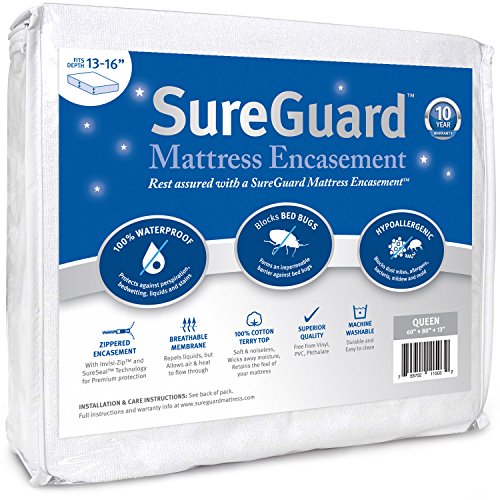
SureGuard Queen Mattress Encasement (13-16 in. Deep)
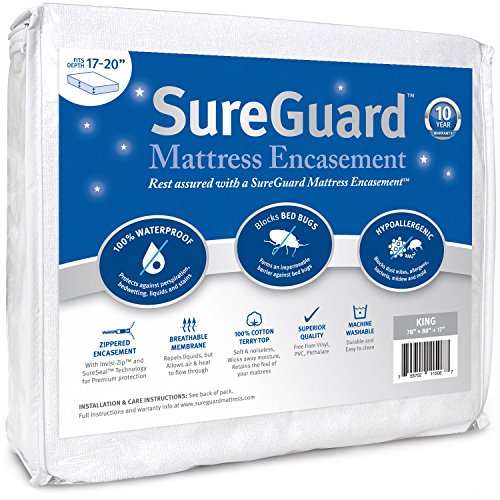
SureGuard King Mattress Encasement (17-20 in. Deep)

HUMFY Queen Mattress Bag with 8 Handles

SureGuard Twin Mattress Encasement (6-8 in. Deep)

Nordic Elk Queen Mattress Bag for Moving

Clorox Waterproof Fitted Mattress Protector, Elastic (12″)

Clorox Waterproof Fitted Mattress Protector, Zippered (9″)
What Each Pick Brings To The Table
The Bolsoni California King moving bag is built for the one-time problem: getting an oversized mattress out of a house without snagging the corners or dragging grime across the fabric. The polyethylene tarpaulin is thick enough to shrug off friction against door frames and truck walls, and the heavy-duty zipper runs the full length so the mattress slides in without forcing it.
For a household relocating across town, eight patented carry handles mean two people can balance the load around stair landings without one partner taking the brunt. In most moves I think about, that shared grip saves both the mattress and the movers’ backs.
What It Does Well
- Thick tarpaulin body resists tears during stairway turns
- Full-length zipper lets the mattress slide in without bending
- Eight handles distribute weight between two carriers
- Reusable across multiple moves, reducing long-term cost
- California King fit covers the largest common mattress size
Things To Consider
- Not a bed bug encasement: it’s a transit shell, not an everyday sealed cover
- Polyethylene can feel slippery when sliding the mattress in alone
Key Product Details
Built With In Mind
Homeowners and renters prepping for a cross-town or long-distance move with a California King mattress need a reusable transit cover that protects the corners.
Consider Something Else When
Anyone facing an active bed bug infestation should pair this transit bag with the SureGuard King Mattress Encasement for a sealed sleeping surface after the move.
The SureGuard Queen Encasement is the model I reach for when the problem is real: an active infestation that needs a true barrier, not a fitted topper. Six-sided coverage means the zipper seals across the entire mattress, and the Invisi-Zip design hides the teeth where bed bugs love to slip through. The top layer is cotton terry, which keeps the sleeping surface from feeling like a plastic tarp.
For an apartment dweller who has just finished professional treatment, leaving this on for the recommended period starves any survivors. In a household with allergy sufferers, the hypoallergenic construction helps on top of the bug defense.
Strong Points
- Six-sided seal blocks escape routes at corners and seams
- 100% waterproof membrane catches spills and accidents
- Cotton terry top layer feels closer to a regular sheet
- Quiet under movement, unlike crinkly vinyl alternatives
Worth Noting
- Installation requires two people to slide the mattress in cleanly
- Deeper mattresses over 16 inches need the King 17-20 in. version instead
Best Suited To
Anyone finishing a professional bed bug treatment on a standard Queen mattress between 13 and 16 inches deep.
Look Elsewhere When
Shoppers with a plush pillow-top over 16 inches should grab the SureGuard King (17-20 in. Deep) Encasement for a proper fit.
The 17-20 inch depth range is where most standard encasements give up, and that’s exactly where this SureGuard model earns its keep. A luxury pillow-top or a layered foam build often lands in that zone, and forcing a shallower cover over it leaves gaps at the corners where bugs enter. The same six-sided construction and Invisi-Zip closure from the Queen version carries over, so the sealing logic stays consistent across the lineup.
For a couple with a thick mattress who just finished treatment, the added depth means a snug fit without wrestling the fabric. Pair it with a SureGuard box spring encasement and the bed becomes a sealed unit.
Where It Excels
- Handles 17-20 in. profiles that defeat most competitors
- Same proven six-sided bed bug seal as the rest of the SureGuard line
- Waterproof backing protects against accidents and spills
- Hypoallergenic cover benefits allergy-prone sleepers
Trade Offs
- Bulkier profile is harder to install solo on a King mattress
- Overspec for thin mattresses, where the 6-8 in. Twin model fits cleaner
Key Product Details
Right Fit For
Owners of thick King mattresses (17-20 in. deep) managing a bed bug problem or building a long-term allergen barrier.
Another Choice May Suit
Sleepers on a slimmer King should size down to the SureGuard Queen model only if their mattress is actually a Queen; otherwise consider a thinner fitted protector like the Clorox 9″ zippered version.
HUMFY built this Queen moving bag for the awkward move: narrow stairwells, tight corners, and apartment hallways where the mattress has to flex rather than glide. The tarpaulin is tear-resistant, and the eight handles are double-stitched so they hold up under the kind of awkward pulling that happens when one person is above and the other is below on a landing.
For someone moving out of a third-floor walk-up, the dual zippers let you access the mattress from either end, which simplifies the angle of approach. It’s the kind of detail that only matters once, but matters a lot that once.
A Strong Showing
- Double-stitched handles survive heavy two-person lifting
- Tear-resistant shell holds up against sharp banisters
- Dual zippers ease positioning in tight spaces
- Reusable design trashes less than disposable bags
Honest Caveats
- Like the Bolsoni bag, this is a transit shell, not an everyday mattress encasement
- Owners commonly report the bag is bulky to fold flat for storage between moves
Whose Shelf It Belongs On
Queen mattress owners prepping for a relocation that involves stairs, tight corners, or limited elevator space.
Swap It Out When
For a long-distance haul where a heavier California King mattress is involved, the Bolsoni California King Mattress Moving Bag handles the larger dimensions.
The 6-8 inch range covers most traditional innerspring and basic foam mattresses, including the bunk beds and trundles that get handed down through kids’ rooms. The same SureGuard sealing system shows up here, so the bed bug protection logic carries over from the deeper models. For a parent dealing with a college dorm room, this encasement fits the standard-issue dorm mattress without bunching at the corners.
It also works in guest rooms where the mattress is older and the priority is sealing it off before the next visitor arrives.
Well-Handled Touches
- Fits shallow mattresses where deeper encasements leave loose fabric
- Same Invisi-Zip seal technology as the rest of the SureGuard line
- Waterproof layer catches nighttime accidents and spills
- Compact Twin size is easier to install without a second pair of hands
Small Caveats
- Not suitable for mattresses thicker than 8 inches, even if they’re labeled Twin
Feature Snapshot
Who Should Grab It
Parents and dorm-dwellers with a shallow Twin mattress between 6 and 8 inches deep who need a true bed bug seal rather than a fitted cover.
Where Another Pick Suits Better
For a Twin mattress used primarily as a spill catcher rather than for sealing, the Clorox Waterproof Fitted Protector (12″ elastic) is easier to swap out.
The Nordic Elk Queen bag is a simpler take on the moving cover: one layer of protective material, a closure, and not much else. For someone storing a mattress in a garage or basement for a season, that simplicity is the appeal. It blocks dust and moisture during a short storage window, which is the most common reason a mattress gets bagged in the first place.
It lacks the eight handles and reinforced stitching of the Bolsoni and HUMFY options, so the carry comfort drops on a long carry. Within a single home, that’s rarely a problem.
Where It Helps
- Lightweight shell slips on quickly for short-term storage
- Protects against dust and light moisture in basements or garages
- Lower complexity keeps the storage process straightforward
Less Ideal Details
- Not designed as a bed bug seal, so it won’t trap insects on the mattress surface
- Fewer carry points than the Bolsoni and HUMFY bags for two-person moves
- Thinner material is more likely to scuff on rough surfaces
Perfect Match For
Households that need a basic cover to keep a guest-room or seasonal mattress clean during a few months of indoor storage.
Skip It When
Anyone moving a Queen mattress through stairwells should step up to the HUMFY Queen Mattress Bag for stronger handles.
The Clorox elastic protector is a different category from the encasements above: it’s a fitted topper that snaps over a mattress the way a sheet does, with elastic edges instead of a zipper. For a household whose real concern is liquid accidents, bed-wetting, or drink spills rather than a bed bug infestation, that simplicity wins. The vinyl layer wipes clean in seconds, which matters at 2 a.m. with a wet sheet.
For a college setup or a child’s room, the elastic enclosure is faster to swap between wash cycles than a zippered cover. You trade the full seal for convenience.
Features That Help
- Elastic enclosure installs in under a minute
- Wipe-clean vinyl handles spills without laundering
- 12-inch pocket fits standard dorm and kid mattresses
- Lightweight and easy to fold between uses
Points To Note
- Open-bottom design does not seal against bed bugs
- Vinyl can feel warm in summer without a top sheet
Quick Technical Notes
Who Will Love This
Parents and dorm residents who need a fast-swap, wipe-clean liquid barrier rather than a full bed bug seal.
Reach For A Different Pick When
Anyone facing an actual bed bug issue should pick the SureGuard Twin Mattress Encasement for a real six-sided seal.
The zippered Clorox protector lands in a useful middle ground between the elastic version and a true encasement. The 9-inch depth suits thinner kids’ mattresses and older innerspring builds where a deeper cover would bunch. The zippered closure adds a layer of security over an elastic fit, while the vinyl top still wipes clean in seconds after a spill.
For a guest bed that gets occasional use, this is the kind of cover that stays on for months without needing laundering. It is a different tool than the encasements, and the right call for liquid protection on a slim mattress.
Practical Pluses
- Zippered fit stays put through restless sleepers
- 9-inch depth matches low-profile and antique-style mattresses
- Wipe-clean surface simplifies midweek cleanup
Worth Bearing In Mind
- Still not a six-sided seal, so it does not trap bed bugs on the mattress surface
- Vinyl layer can crinkle under movement compared to a cotton-top encasement
- Limited to thinner mattresses; 12-inch beds need the elastic Clorox instead
Made For
Households with thin Twin mattresses in kids’ rooms or guest beds that need wipe-clean waterproofing rather than a bed bug seal.
Where A Sibling Pick Shines
For any active bug concern, the SureGuard Twin Mattress Encasement (6-8 in. Deep) provides the actual six-sided seal this cover cannot.
What Matters Most Before Choosing Bed Bug Mattress And Box Spring Protectors
Match The Tool To The Problem
A true bed bug seal requires a six-sided encasement: top, bottom, and all four sides zipped shut. A fitted protector that snaps over the top of a mattress leaves the bottom and seams exposed, which is where insects travel. For households with an active infestation or a recent treatment, an encasement is the only category that works. For households worried about spills, pets, or general hygiene, a fitted waterproof protector is faster to live with day to day.
Moving bags fall into a third category: a one-time-use transit shell that protects against dirt, scuffs, and moisture during a move, but should not stay on the bed long-term. Mismatching these categories is the most common misstep, and the one that costs the most to fix.
Size And Depth Decide Real Fitting
Mattresses range from 6 inches in basic kids’ builds to 20 inches in luxury pillow-tops. A cover that fits a 6-8 inch profile leaves a deep mattress exposed at the corners, and a 17-20 inch cover on a shallow mattress bunches badly. Measure the mattress depth from the base to the tallest crown before picking a size, and account for any topper that adds extra height.
Width matters too, especially in shared models: a Queen encasement on a King mattress leaves the edges exposed, while a King encasement on a Queen mattress folds under. Always match the labeled size to the actual mattress dimensions.
Material Choice Changes Daily Comfort
Cotton terry tops feel closer to a regular sheet and sleep quieter, which matters for light sleepers. Vinyl tops wipe clean in seconds and resist water perfectly, but they trap heat and crinkle under movement. Polyethylene tarpaulin only belongs in moving bags, never on a bed full-time. Hypoallergenic claims are most useful for allergy households, where dust mites and dander are the real concern rather than the encasement material itself.
Closure Style Affects Real Seal Quality
Invisi-Zip and SureSeal designs tuck the zipper teeth under a flap, which is the small detail that separates an effective bed bug seal from a leaky one. Standard zippers leave a gap small enough for nymphs to slip through. Elastic enclosures are the fastest to install, but they do not seal at all. The closure type tells you almost everything about how a cover will perform in a real infestation.
Key Considerations Across These Picks
Where Shoppers Go Wrong
The single biggest mistake is treating a fitted waterproof protector as a bed bug solution. The elastic or zippered topper leaves the bottom of the mattress open, which lets insects travel in and out freely. Another common slip is choosing a cover based on mattress size alone and ignoring depth: a Queen cover on a 14-inch mattress often fits, but a King cover on a 10-inch Queen mattress leaves loose fabric that bunches under the sleeper. A third trap is buying the cheapest moving bag and expecting it to double as long-term protection. The material and closure of a moving bag are designed for a single transit, not a year on a bed.
When Paying More Pays Off
Higher-tier encasements earn their cost through three upgrades: deeper depth ranges that fit pillow-top mattresses, finer zipper systems that close the gap at the teeth, and quieter top layers that don’t disturb sleep. For a household dealing with an active infestation, those upgrades shorten the treatment window because the seal is reliable. For a household that just wants a basic waterproof cover, the savings from a fitted vinyl model outweigh the encasement premium. The honest read is to match spend to the actual problem: encasement money for bugs, moving-bag money for transit, and fitted protector money for spills.